|
Three lines. Some say that the first line should contain five syllables, the second seven, and the third five again— Others say that that's not really appropriate for foreign languages. Contrariwise, I might argue that application to other languages would simply result in a different but equally valid universe of possibilities. But then I just don't worry about it.
With non-Japanese Some say that the first and second lines should appear unrelated, until tied together by the third; I suspect that this was inspired by the basic word order of the Japanese language, subject object verb, or perhaps it was some third thing that influenced both language and poem. A seasonal reference is good. Three thoughts, not three lines... three lines. I like the first and second line to seem unrelated until tied together by the third. But if not, okay. Maybe even better. I like the third line to be shorter than the others. If I force 5/7/5 syllabic structure, even unconsciously, then the result does not reflect the original. And does reflect my language. May be better, may be not, but not the same. But it is an exercise. 5/7/5 makes me smile when it happens anyway. |
Zne-Hajkoj - D-ro Istvan Bierfaristo Araneo kaj Leibnitz - Cezar Esperanta literaturo - laŭ Sibayama Lageta rano - kompara traduko de Basyoo eLibroj de Hu Guozhu - ink. Li Bai kaj Du Fu honku.org - Zen Antidote to Road Rage Poemi e rakonti - Siobhán Sheehan Japaneskoj - Diskutlisto ĉe Yahoo! Kio estas japaneskoj? - Glosoj Hajko - Ĉe Vikipedio Kigo - At Wikipedia |
|
88. How To Write a Chinese Poem A well-known Japanese poet was asked how to compose a Chinese poem. "The usual Chinese poem is four lines," he explained. "The first line contains the initial phase; the second line, the continuation of that phase; the third line turns from this subject and begins a new one; and the fourth line brings the first three lines together. A popular Japanese song illustrates this:
Two daughters of a silk merchant live in Kyoto.
- Paul Reps : Zen Flesh, Zen Bones p 72
|
| Masaoka Shiki is called the father of modern haiku. |
spring rain. browsing under my umbrella at the picture-book store. |
Bufo vokas |
||
|
Kafo. Aero turbula. Paĝoj makulitaj.
Aero turbula. |
Taso da kafo. Aeroturbulo. Paĝoj makulitaj. |
Aero tumultema. Kafo makulas la paĝojn.
Aero tumultema. |
| Christmas 2001, Gray day then moonlit night after a brief and gentle snowfall, the winding paths painted uniformly with snow, The weeds, some standing tall, others leaning clumped together, had shrugged off the flakes as they arrived, Snowcover in the weeds deeper but uneven, patchy, spotty, and the ground there darker... |
|
Walking to my car after workSnowflakeIn my ear. Wet Willy! |
IncarnationSouls come and go,That's all we know. |
|
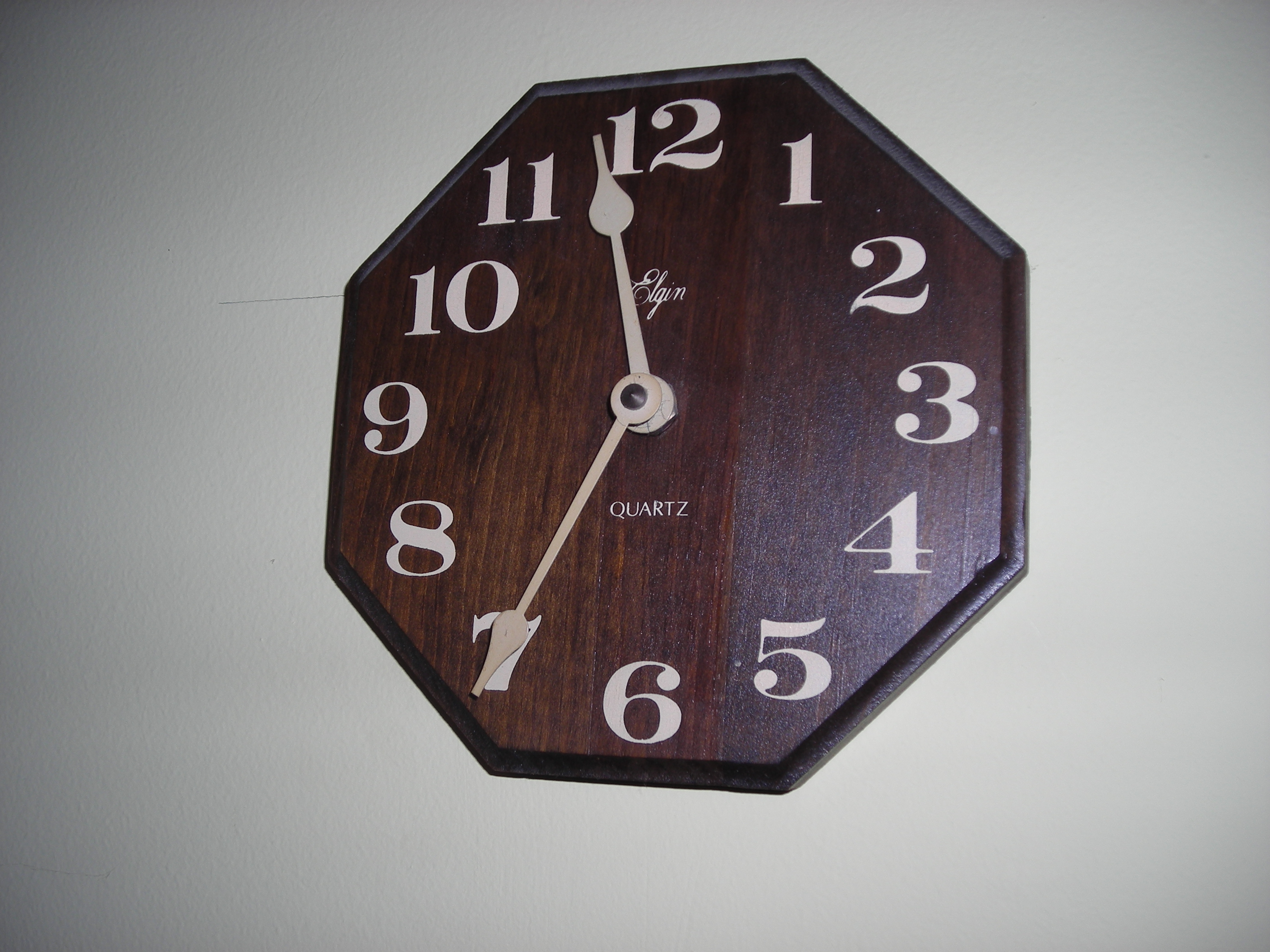
Elgin quartz |
PluvasPluvas!Pluva griza tago sur la ŝoseo. Eble mi veturigos pluen Ĝis la marbordo haltigos min. Sur la strando stari Kaj la maron rigardi Kaj ŝtonetojn ĵeti Pluve. Sed... Sendube antaŭ alveno ĉesus la pluvo Kaj brilus la suno Kaj homplenus la strando... Fek! Nu... ne gravas... |
La Figuro, Siluete(matena sunlumo tra la fenestro)
Laŭ koridoro ŝi preterpasas.
Robo blanketa, diafana.
Karesante postaĵon. |
| The tanka, or uta, is a form of Japanese poetry whose basic structure is five lines consisting of 31 syllables, 5+7+5+7+7. The first three lines are called the upper part, and the last two are called the lower part. Sometimes the upper part was written by one poet and the lower by another. Longer tanka could be created by making chains of the basic tanka, sometimes written by two or more poets taking turns. Eventually the upper part became a form in its own right, known as the haiku. |
Kunsidejo (Meeting Room)
|
Birdshine (birdbrilo)
Sunbrilo reflektiĝis de pintoj de lignaj fostoj apud la garbejo?—
Pli proksimen— mi vidis, ke la pintoj blankis—
Pli proksimen— mi fortimigis birdon de sur unu—
Ah!
|
Atop each fencepost birdshit. |
Sur ĉiu barilofosto birdofeko. |
Sur ĉiu barilofosto birdfekaĵo. |
|
Sur ĉiu barilofosto birdokako. |
Sunbrilas sur barilo fostpintoj blankas birdfeko. |
|
|
Sur ĉiu barilofosto birdomerdo. |
Ĉu barilo sunbrilas? Ĉiu fostpinto blankas. Birdfeko. |
Barilofostoj supre farbitaj per birdfeko. |
|
Sunlight reflecting from the tops of wooden fenceposts by the barn?— Closer— I saw that the tops were white— Closer— I frightened a bird from one— Ah! |
One of life's little pleasures (Vivplezureto)
|
Take book from shelf and blow dust off the top of it. |
Prenu la libron de sur la breto, blovu polvon de sur la supraĵo. |
|
De la breto libron prenu, de supraĵo polvon blovu. |
Take the book from the shelf and blow the dust from the top. |
la fina hajko
|
ashes in a box. my son. |